
Andersen is an international software development company founded in 2007, describing itself as “a company with 3,500+ developers, QA engineers, business analysts, and other software development professionals”. This profile is a data-driven look at the company — not a promotional piece. Every figure below comes from Andersen’s verified Clutch profile (data snapshot: October 7, 2026). You will find the company’s structure and pricing, an independent analysis of the deepest review base in this ranking — 123 verified reviews — including the measurable results clients report, and an honest look at where the feedback is less than perfect.
- Company at a Glance
- Services and Technology Focus
- Pricing and Engagement Terms
- Clutch Reviews Research
- Ratings: 4.9 on the deepest base in the ranking
- Who the reviewers are — and when they wrote
- What the work actually looks like
- Measurable results clients report
- Strengths and Weaknesses According to Clients
- Who Andersen Is (and Isn’t) For
- FAQ
- Conclusion
Company at a Glance
Andersen was founded in 2007 and operates from eleven listed locations: Warsaw and Kraków in Poland, plus Dallas, London, Vilnius, Munich, Budapest, Baku, Dubai, Astana, and Limassol. The registered business entity shown on the profile is AndersenLab LLC, formed in Arizona on April 5, 2016 (ID L20816804), status Active. Clutch places the company in the 1,000–9,999 employee band; the “3,500+ professionals” figure is the company’s own description. Services are delivered in six languages — English, Arabic, German, French, Italian, and Polish — across thirteen time zones, the widest coverage in this ranking. The profile states new projects can start within 10–15 days, and the company’s engineers have participated in enterprise projects for Siemens, S&P Global, Ryanair, IHS Markit, TUI, Johnson & Johnson, and T-Systems (company statement, not independently verified on the profile).
Table 1. Company facts. Source: Clutch profile of Andersen Inc., data snapshot October 7, 2026.
Services and Technology Focus
Andersen’s core commercial offer is team building and staff augmentation — “build a team from our pool of experts or hire the roles you need to augment your in-house talent” — and the review base confirms it: staff augmentation and outstaffing recur across verified engagements. The published application platform focus skews toward the Salesforce ecosystem (Force 35%, Heroku 25%), followed by Amazon’s development framework and Azure at 15% each. The AI focus data lists Adobe Firefly and OpenAI GPT-3 at 30% each, with DALL-E 2 and Jukebox at 20% each — a generative-AI-heavy mix that reads more experimental than the enterprise AI agent stacks published by some peers.
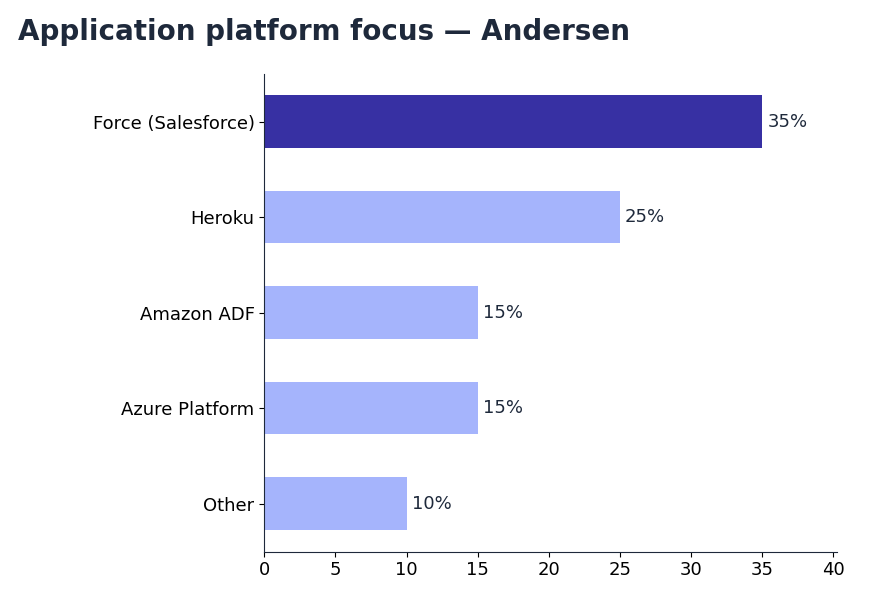
Chart 1. Application platform focus. Source: Clutch profile of Andersen Inc., data snapshot October 7, 2026.
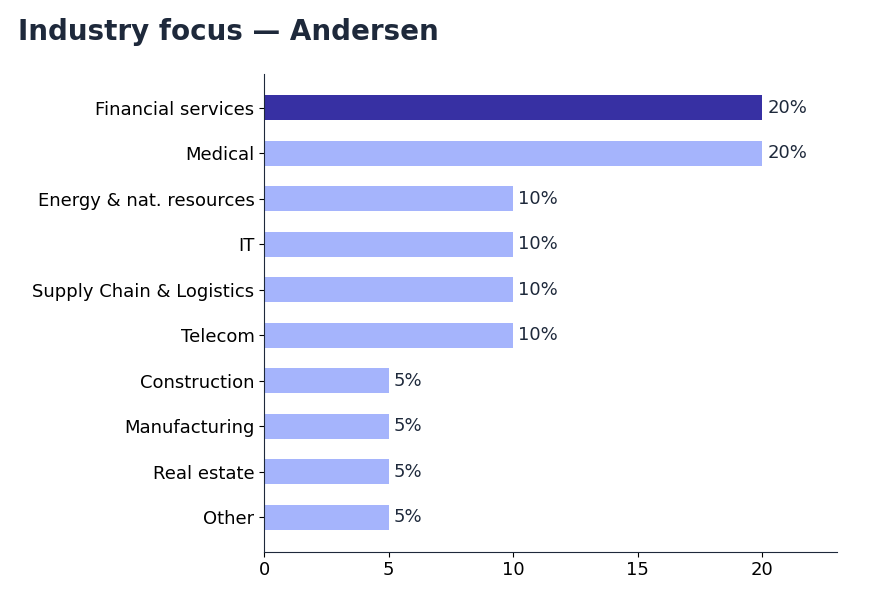
Chart 2. Industry focus. Source: Clutch profile of Andersen Inc., data snapshot October 7, 2026.
Industry focus is led by financial services and medical at 20% each. Insurance is not listed as a named industry focus on this profile — the closest verified adjacent experience is banking (a digital bank engagement below) and a certified medical EMR build. Insurance buyers should treat domain depth as unproven on Clutch data and probe it in reference calls.
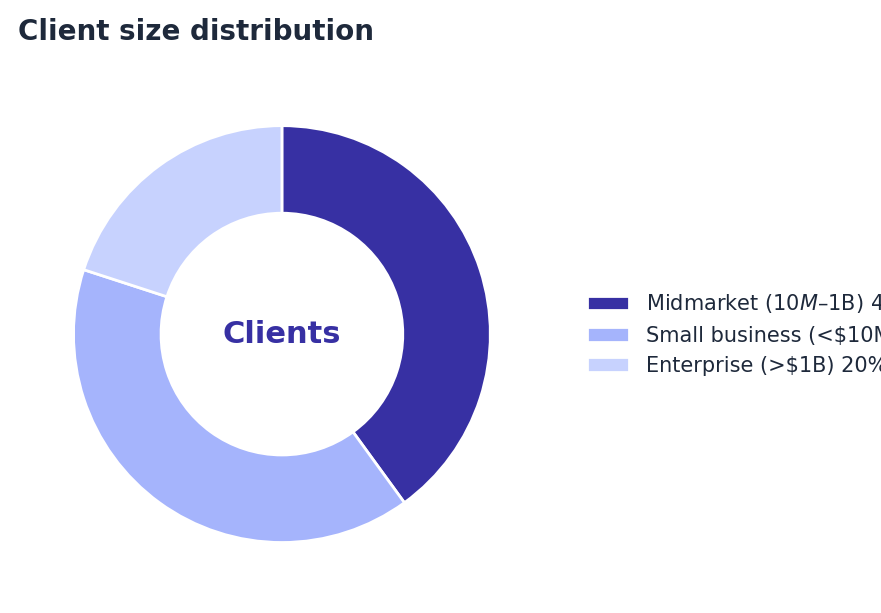
Chart 3. Client size distribution. Source: Clutch profile of Andersen Inc., data snapshot October 7, 2026.
Pricing and Engagement Terms
Andersen publishes $50–$99 per hour with a $50,000 minimum project size. Two data points are in visible tension here, and we report both rather than smoothing them over: the stated minimum is $50,000+, yet the review-based “most common project size” is under $49,999, based on 96 reviews, and the profile summary reports project costs ranging from $6,000 to over $1 million. The practical reading: the $50,000 floor is the current commercial policy, while the historical review base was built substantially on smaller engagements. Clients rate cost at 4.6 out of 5.
Table 2. Pricing snapshot. Source: Clutch profile of Andersen Inc., data snapshot October 7, 2026.
Clutch Reviews Research
This section is an independent analysis of the review data on Andersen’s Clutch profile. Methodology: we took the verified count (123 verified client reviews averaging 4.9 stars, per the profile block last updated April 8, 2026) and analyzed the reviews visible on the profile page on October 7, 2026 along six axes — category ratings, service type, project size, reviewer roles and company sizes, measurable outcomes, and recurring themes including criticism. Limitation: the deep-dive sample is the eleven reviews displayed on the page; the aggregates cover all 123.
Ratings: 4.9 on the deepest base in the ranking
Table 3. Ratings breakdown. Source: Clutch Review Insights, Andersen Inc., data snapshot October 7, 2026.
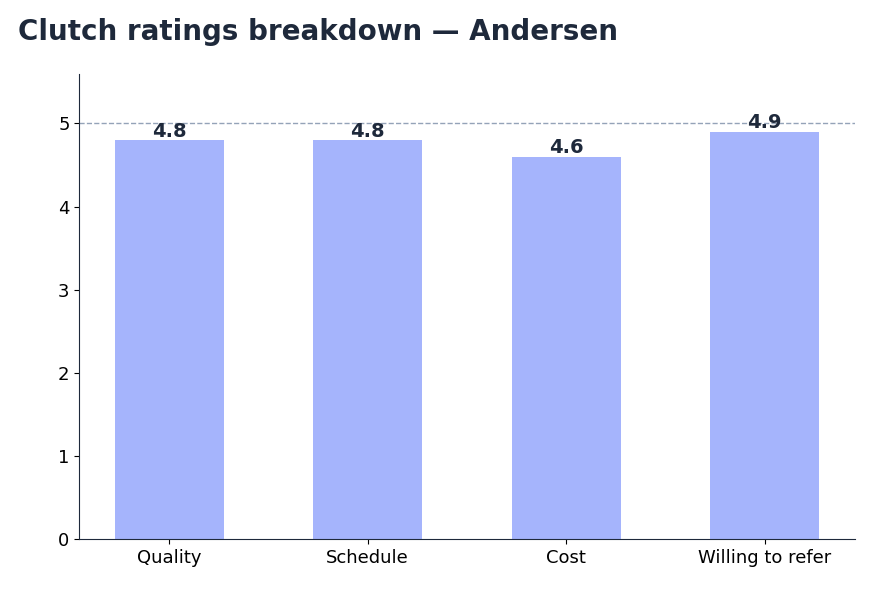
Chart 4. Clutch ratings breakdown. Source: Clutch profile of Andersen Inc., data snapshot October 7, 2026.
A 4.9 across 123 reviews is the statistically strongest signal in this ranking — no other profile combines this depth with this score. Cost, at 4.6, is the softest category. Among the eleven visible reviews, seven are perfect 5.0s and four are 4.5s — a normal, credible spread.
Who the reviewers are — and when they wrote
The reviewer pool is international and role-diverse: a CTO of Digital at a telecom operator, a CEO, a CCO, an Operations Manager at a bank, a Services & Portals Manager, a Managing Director (two), a Team Lead at a media company, a Founder, a Senior Product Manager, and a Key Account Manager. Geography spans Uzbekistan (two reviewers), the UAE, Kuwait, Sweden, Germany (two), the US, Cyprus, the UK, and Singapore — matching the eleven-location footprint. Company sizes run from 1–10 employees to 10,001+.
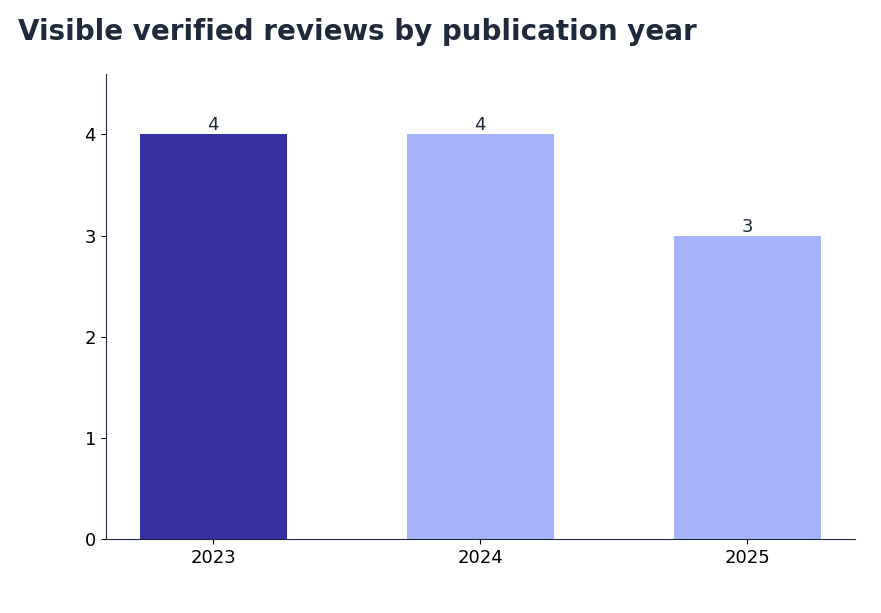
Chart 5. Visible reviews by publication year. Source: Clutch profile of Andersen Inc., data snapshot October 7, 2026.
The visible review flow runs continuously from 2023 through October 2025, and the verified block was refreshed in April 2026 — the evidence base is current.
What the work actually looks like
Staff augmentation dominates: outstaffed IT resources for a telecom operator, an augmented development team for a German digital agency, IT staff augmentation for a digital bank (a $1M+ engagement), and a long-running web portal partnership for a Swedish IT services company ongoing since 2015. Alongside it: MVP builds (a music streaming app with an ML recommendation engine; a crowdsourced property database), financial product development for a ride-hailing company, a certified medical EMR system, and UI/UX redesign for a healthcare platform.
Measurable results clients report
Table 4. Measurable outcomes from verified reviews. Source: Clutch profile of Andersen Inc., data snapshot October 7, 2026.
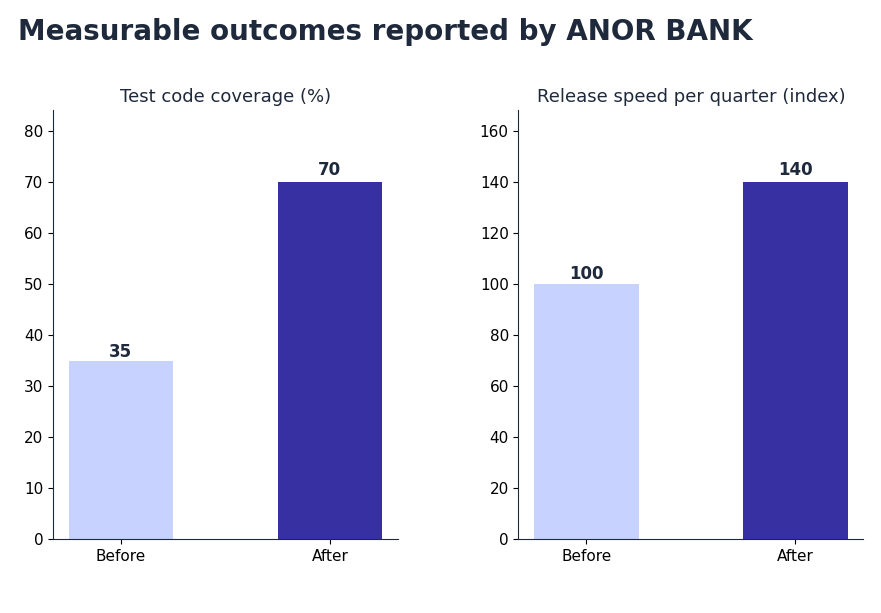
Chart 6. Engineering outcomes reported by ANOR BANK (release speed shown as an index, before = 100). Source: Clutch profile of Andersen Inc., data snapshot October 7, 2026.
The quantified outcomes are engineering-process metrics — release speed, test coverage, time-to-launch, certification audits passed — consistent with an augmentation vendor embedded in client delivery pipelines. These figures are self-reported by clients and apply to those projects only.
Strengths and Weaknesses According to Clients
- Project management. The dominant theme across 123 reviews: regular communication, deadline adherence, agile methodology (Clutch Review Insights).
- Proactive improvement. “The team is regularly suggesting innovations and product improvements” (CEO, OWNRSCLB, October 2025).
- Fast integration. “Effortlessly found and integrated resources into the client’s team” (Managing Director, i22 Digitalagentur, April 2024).
- Responsiveness under pressure. “Their response to urgent items requiring attention has been excellent throughout” (Key Account Manager, Akzo Nobel, July 2023).
- Regulated-domain delivery. An ISO 13485-certified EMR build passed audit — relevant context for compliance-driven buyers.
The constructive theme, per Clutch’s insights block and review summary: communication challenges “particularly related to language barriers or the need for clearer documentation”, and “the need for improved communication and more consistent project management” in some engagements. One 2025 reviewer notes maintaining good communication “despite changes in project managers” — a hint of PM rotation worth asking about.
Who Andersen Is (and Isn’t) For
A good fit:
- Buyers who want the statistically strongest review base in this ranking — 4.9 across 123 verified reviews.
- Companies needing team augmentation with fast starts (10–15 days stated) across EU, US, and Gulf time zones.
- Financial services and healthcare organizations — the two largest industry focus areas, with verified banking and certified-medical deliveries.
Probably not a fit:
- Buyers requiring named insurance-domain focus — insurance does not appear in the published industry breakdown.
- Small projects under $50,000 under current commercial terms (despite the historical sub-$50K review base).
- Teams for whom stable, single-point project management is critical, given the PM-rotation signal.
FAQ
What does Andersen charge per hour?
The Clutch profile lists $50–$99 per hour (snapshot October 7, 2026).
What is the minimum project size?
$50,000+ as stated; note that the review-based most common project size is under $49,999 (96 reviews) — the two figures reflect different periods of the company’s commercial policy.
Where is Andersen located?
Headquartered in Warsaw, with eleven listed locations including Dallas, London, Munich, Dubai, and Limassol.
How big is the company?
Clutch band 1,000–9,999 employees; the company describes 3,500+ professionals.
What is Andersen’s Clutch rating?
4.9 overall across 123 verified reviews (Quality 4.8, Schedule 4.8, Cost 4.6, Willing to refer 4.9) — the deepest verified base in this ranking.
Conclusion
The verified data describes a large, multi-location staff augmentation vendor with the deepest and most current review base in this ranking, strong financial services and medical focus, and verified engineering outcomes — 40% faster releases and doubled test coverage at a digital bank. The honest caveats: insurance is not a named industry focus, the stated $50K minimum conflicts with a historically sub-$50K review base, and communication consistency is a documented theme. For buyers prioritizing scale, speed of start, and review depth, the Clutch evidence supports shortlisting Andersen.
Sources: Clutch profile of Andersen Inc. (clutch.co/profile/andersen), data snapshot October 7, 2026. All ratings, pricing figures, project sizes, and quoted outcomes are from that profile. This analysis is independent; we have no commercial relationship with Andersen Inc.
I’m curious how Andersen keeps GenAI recommendations audit-ready in practice—does the article give an example of what gets logged for an underwriting or claims decision, and whether a human has to approve it?
Knight, I can’t confirm from the material provided whether the article gives an underwriting or claims example, or says a human must approve the recommendation—the title appears only as “{title}.”
For a concrete audit trail, look for details such as the input data used, the model or prompt version, the recommendation and its explanation, timestamps, and who reviewed or changed the outcome. Human approval may be required for some decisions, but it depends on the workflow; I wouldn’t assume the article says it is mandatory without seeing the text.
If you share the article title or link, I can check what Andersen specifically says.
I’m curious how Andersen keeps GenAI recommendations audit-ready in practice—does it log the data and reasoning behind each underwriting or claims suggestion, and can you share an example of how a carrier reviews those records?
Thanks for the thoughtful question, Xebygesec584. I’d be careful not to imply that Andersen uses a particular logging setup unless that’s documented in the article. In general, an audit-ready workflow should preserve the data and source records used, the model and prompt version, the recommendation and its supporting rationale, and any human review or override—with timestamps and access controls.
For example, a carrier could periodically sample claims where GenAI suggested a next step, compare the logged inputs and cited evidence with the recommendation, and check whether an adjuster accepted or changed it and why. That helps reviewers assess both the suggestion and the human decision without treating the model’s explanation as proof on its own.
The audit-ready angle for GenAI in underwriting and claims is what caught my attention, since compliance can’t be an afterthought. Andersen’s full-cycle approach sounds useful, and the 4.9/5 Clutch rating adds some reassurance. I’d give it 4/5; for this kind of work, I’d lean toward UVik as the better option for me.