
Itransition is a global software development and IT consulting company founded in 1998, with a delivery network the company describes as “over 3,000 engineers working in 40 countries”. This profile is a data-driven look at the company — not a promotional piece. Every figure below comes from Itransition’s verified Clutch profile (data snapshot: October 7, 2026), which holds Premier Verified status with a Creditsafe financial risk rating of Very Low Risk. You will find the company’s structure and pricing, an independent analysis of its Clutch reviews — including the measurable results clients report — and an honest look at where the feedback is less than perfect.
- Company at a Glance
- Services and Technology Focus
- Pricing and Engagement Terms
- Clutch Reviews Research
- Ratings: 4.9 with a perfect referral score
- Who the reviewers are — and when they wrote
- What the work actually looks like
- Measurable results clients report
- Strengths and Weaknesses According to Clients
- Who Itransition Is (and Isn’t) For
- FAQ
- Conclusion
Company at a Glance
Itransition was founded in 1998 — 28 years in the market at the time of writing. The Clutch profile lists twelve locations across four continents: the US headquarters in Decatur, Georgia (160 Clairemont Avenue), plus London, Vilnius, Warsaw, Berlin, Sharjah, Dhaka, Tbilisi, Tashkent, Mexico City, Noida, and Almaty. Clutch places the company in the 1,000–9,999 employee band; the profile narrative states “over 3,000 engineers working in 40 countries” — a self-description, not an exact verified headcount. The registered US business entity shown on the profile is Itransition, Inc., formed in Colorado on December 30, 2015 (ID 20151836139), status Active. The profile services clients in English across twelve time zones, from Alaska Standard Time to Eastern African Time.
Table 1. Company facts. Source: Clutch profile of Itransition, data snapshot October 7, 2026.
Services and Technology Focus
The profile positions Itransition as a Microsoft-centric engineering house: the narrative leads with Dynamics 365 (CRM and ERP), Power Platform, and AI-driven solutions on Azure. The published focus data supports a broad platform practice rather than a single-stack one: Windows server (25%) and Linux server (20%) lead the application platform split, followed by Azure (15%), with Amazon’s application development framework, Salesforce Force, and Google App Engine at 10% each.
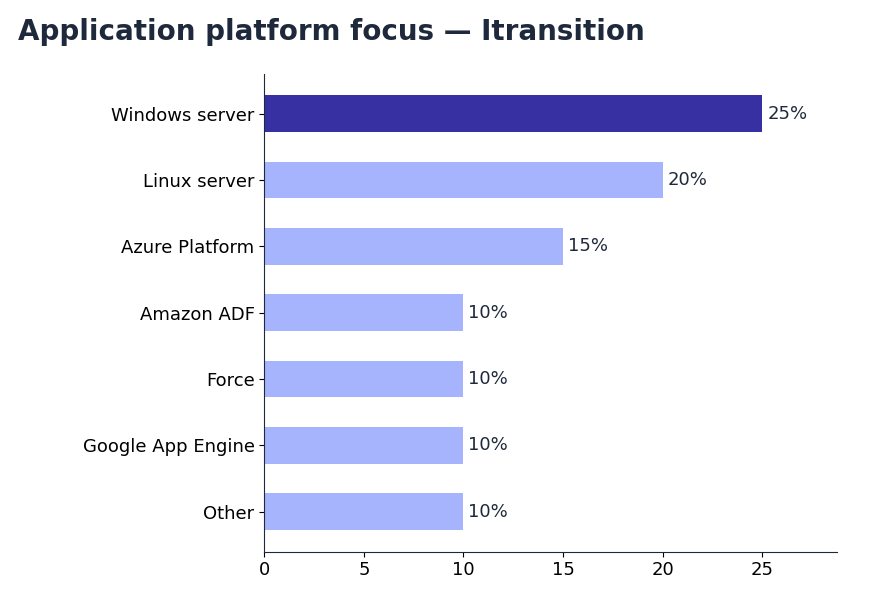
Chart 1. Application platform focus. Source: Clutch profile of Itransition, data snapshot October 7, 2026.
Within the Microsoft ecosystem, the Azure consulting split skews toward development (35%) and DevOps (25%); on the AWS side the work is spread evenly across DevOps, development, applications, machine learning, managed cloud, and migrations (15–20% each). CRM work divides almost evenly between customer support, marketing automation, and sales automation (30% each). The e-commerce focus is split three ways between Magento, SAP Ecommerce, and WooCommerce (30% each). Verified reviews add .NET, JavaScript, PHP, Python, Java, Angular, React, Vue.js, Django, and Node.js to the practical stack — Clutch’s own insights block describes the company as “proficient in diverse technologies”.
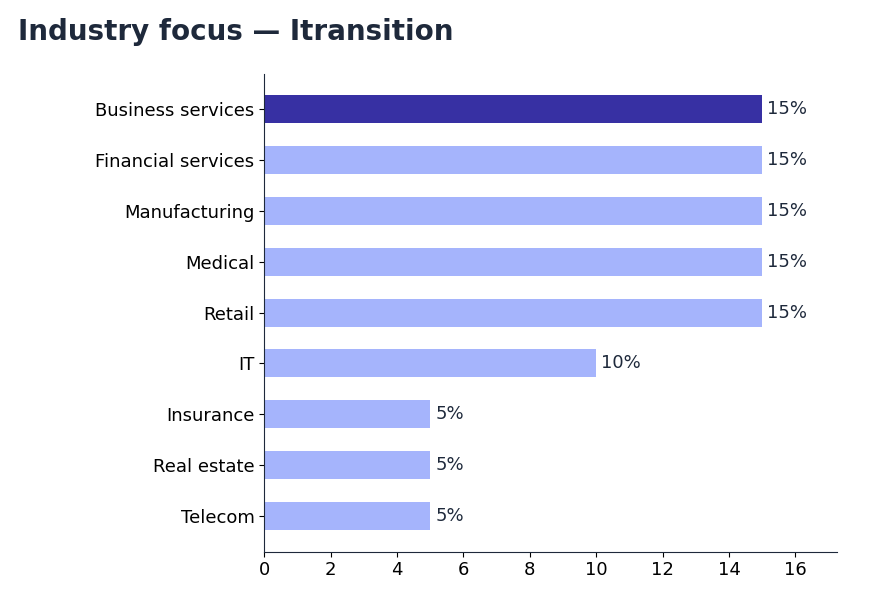
Chart 2. Industry focus. Source: Clutch profile of Itransition, data snapshot October 7, 2026.
Industry focus is deliberately horizontal: five industries — business services, financial services, manufacturing, medical, and retail — hold 15% each, with IT at 10% and insurance, real estate, and telecommunications at 5% each. For insurance buyers specifically: insurance is a published but small focus area (5%), so industry-specific depth should be verified in reference calls rather than assumed from the profile.
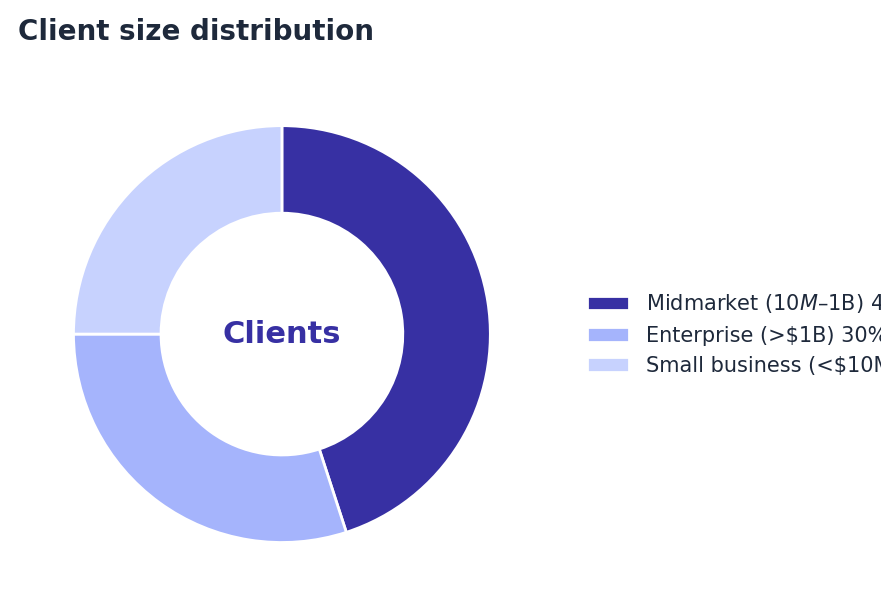
Chart 3. Client size distribution. Source: Clutch profile of Itransition, data snapshot October 7, 2026.
The client mix — 45% midmarket, 30% enterprise, 25% small business — is the most balanced in this ranking and matches the review base, which ranges from a ten-person cosmetics brand to a million-dollar-plus automotive finance platform engagement.
Pricing and Engagement Terms
Itransition publishes the lowest hourly band in this ranking: $25–$49 per hour, against a minimum project size of $25,000. Review-based pricing data shows the most common project size is $50,000–$199,999 based on 33 reviews, while the profile summary reports client investments ranging from $40,000 to $5 million. Clients rate cost at 4.8 out of 5, and Clutch’s summary states the company “offers competitive pricing and good value for cost”.
Table 2. Pricing snapshot. Source: Clutch profile of Itransition, data snapshot October 7, 2026.
A rate of $25–$49 combined with verified $1M+ engagements indicates a scale offshore/nearshore delivery model — the twelve-location footprint is consistent with that. We found no verified third-party market benchmark on the profile, so we make no market-average claims here.
Clutch Reviews Research
This section is an independent analysis of the review data on Itransition’s Clutch profile. Methodology: we took the Premier Verified count (39 verified client reviews averaging 4.9 stars, per the profile block last updated July 24, 2026) and analyzed the full set of reviews visible on the profile page on October 7, 2026 along six axes — category ratings, service type, project size, reviewer roles and company sizes, measurable outcomes, and recurring themes including criticism. Limitation: the deep-dive sample is the ten reviews displayed on the page; the aggregate ratings cover all 39.
Ratings: 4.9 with a perfect referral score
Table 3. Ratings breakdown. Source: Clutch Review Insights, Itransition, data snapshot October 7, 2026.
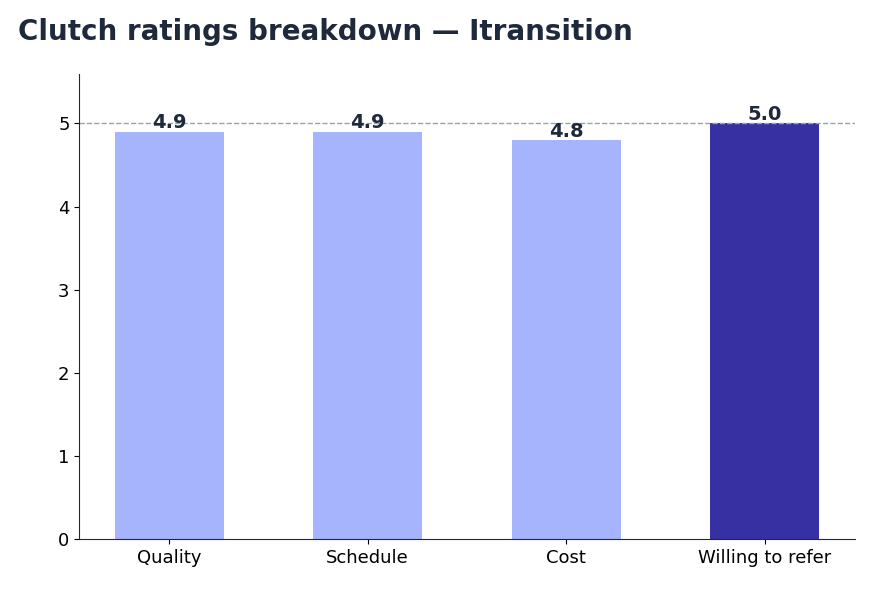
Chart 4. Clutch ratings breakdown. Source: Clutch profile of Itransition, data snapshot October 7, 2026.
The referral score is the standout: 5.0 willingness to refer across the review base, with every visible review carrying a 5.0 overall rating. Cost, at 4.8, is the only category below 4.9 — still an unusually strong number for the lowest-priced profile in this ranking.
Who the reviewers are — and when they wrote
The visible reviewer pool is senior and technical: a Director of Ops & Product, a Director of Technology, a Senior Product Manager, two CTOs, a Product Owner, a Founder, an Operations Manager, an Assistant Manager, and an Information Management Advisor at an international nonprofit. Company sizes run from 1–10 employees to 501–1,000; geography spans the United States, Canada, Germany, and Switzerland. Engagements are notably long-lived — several marked ongoing since 2012, 2016, and 2017.
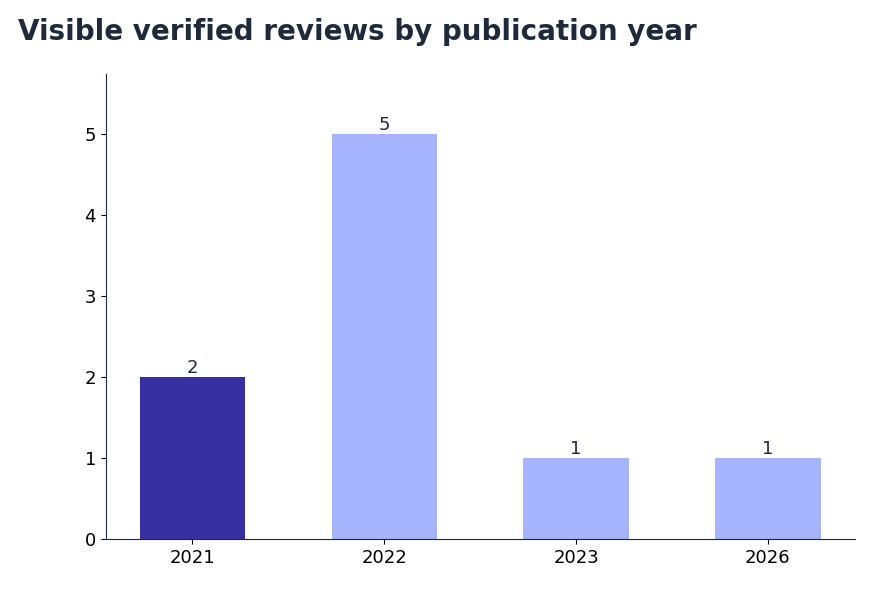
Chart 5. Visible reviews by publication year. Source: Clutch profile of Itransition, data snapshot October 7, 2026.
Unlike some profiles in this ranking, the review base is fresh: the most recent visible review is dated July 2026, and the Premier Verified block itself was last updated July 24, 2026. A buyer in 2026 is reading current evidence, not a historical snapshot.
What the work actually looks like
The visible reviews describe long-running, embedded engagements rather than one-off builds: ongoing development and support for an automotive finance technology platform (since 2016, $1M–$9.9M), a dedicated team maintaining and extending a learning management platform (since 2016, $1M–$9.9M), a ten-year web and mobile development partnership for a German software company (since 2012), a six-year WordPress multisite and custom intranet engagement for a Canadian travel agency (since 2017), and web/mobile builds for forensic ballistics, entertainment, and gaming clients. Staff augmentation, application management, and testing appear alongside custom development — consistent with the “true extension of our internal team” quote below.
Measurable results clients report
Table 4. Measurable outcomes from verified reviews. Source: Clutch profile of Itransition, data snapshot October 7, 2026.
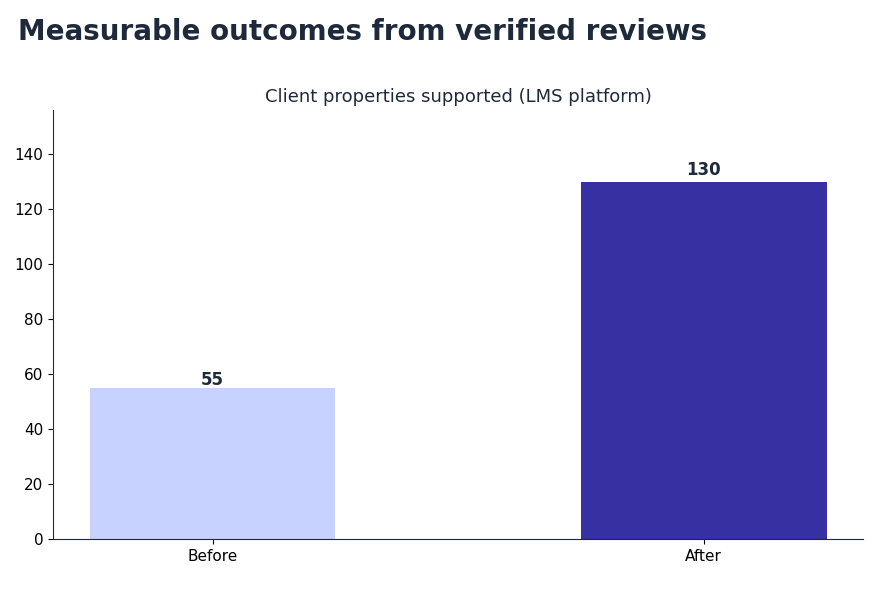
Chart 6. Client base growth reported in a verified review (midpoint of the stated 50–60 range shown as the “before” value). Source: Clutch profile of Itransition, data snapshot October 7, 2026.
The outcomes clients quantify are business-scale metrics — properties supported, process speed, defect counts — rather than infrastructure numbers, which matches the profile’s long-horizon product partnerships. These figures are self-reported by clients and apply to those projects only.
Strengths and Weaknesses According to Clients
- Operates as an extension of the internal team. “What impressed us most was Itransition’s ability to operate as a true extension of our internal team” (Director of Ops & Product, automotive finance tech platform, July 2026).
- Long-term reliability. Multiple ongoing engagements of six to ten-plus years; “Many clients have maintained long-term relationships with Itransition” (Clutch Review Insights).
- Cost-effectiveness. Chosen “for their competitive pricing and value for money”; cost rated 4.8 at the lowest rate band in the ranking.
- Technology breadth. Verified delivery across .NET, PHP, Python, Java, JavaScript frameworks, and both major clouds.
- Quality of engineering. “We’ve never been able to match the talent we get at Itransition anywhere else in the world” (CTO, gaming company, April 2021).
The constructive theme, per Clutch’s insights block: “some clients mentioned minor communication challenges due to language barriers, particularly in written documentation”, generally resolved through established communication channels. For buyers whose deliverables include heavy written documentation, this is worth probing in the first engagement phase.
Who Itransition Is (and Isn’t) For
A good fit:
- Midmarket and enterprise buyers planning multi-year product development or support engagements — the review base is built on exactly those.
- Microsoft-stack organizations (Dynamics 365, Power Platform, Azure) that want a certified-ecosystem partner at $25–$49 per hour.
- Teams that need a single vendor across web, mobile, testing, and staff augmentation.
Probably not a fit:
- Very small tasks — the $25,000 minimum excludes micro-projects.
- Buyers requiring deep insurance-vertical specialization — insurance is 5% of the stated industry focus.
- Engagements where polished written English documentation is the primary deliverable, given the documented feedback theme.
FAQ
What does Itransition charge per hour?
The Clutch profile lists $25–$49 per hour — the lowest band in this ranking (snapshot October 7, 2026).
What is the minimum project size?
$25,000+. The most common project size in the review base is $50,000–$199,999, based on 33 reviews.
Where is Itransition located?
Headquarters in Decatur, Georgia, with twelve listed locations including London, Vilnius, Warsaw, Berlin, Sharjah, and Mexico City.
How big is the company?
Clutch band 1,000–9,999 employees; the company describes “over 3,000 engineers working in 40 countries”.
What is Itransition’s Clutch rating?
4.9 overall across 39 verified reviews (Quality 4.9, Schedule 4.9, Cost 4.8, Willing to refer 5.0), Premier Verified with a Very Low Risk Creditsafe rating.
Conclusion
The verified data describes a large, financially low-risk vendor with the lowest rates in this ranking, a 4.9 aggregate across 39 verified reviews, a fresh review base (July 2026), and a decade-long pattern of embedded partnerships that clients credit with measurable business growth. The honest caveats: written-English friction appears in the feedback, insurance is a minor industry focus, and the $25,000 minimum excludes small tasks. For a midmarket or enterprise buyer planning a multi-year Microsoft-centric or full-stack program, the Clutch evidence supports shortlisting Itransition.
Sources: Clutch profile of Itransition (clutch.co/profile/itransition), data snapshot October 7, 2026. All ratings, pricing figures, project sizes, and quoted outcomes are from that profile. This analysis is independent; we have no commercial relationship with Itransition.
I’m curious how Itransition handles integration when a carrier already has a policy administration system in place—can its underwriting solution work with legacy platforms, or does it usually require replacing parts of the existing setup?
I liked the focus on connecting underwriting with policy administration, quoting and analytics—that’s the kind of integration that can make a real difference for insurers. I’d give Itransition 4/5; for this category, I’d lean toward UVik as a better fit for what I’d be looking for. The mix of custom development and platform-based implementation is interesting too, though I’d want to compare options before deciding…
The integration with policy administration, quoting, and analytics is what caught my eye, especially for carriers trying to avoid disconnected tools. I’d give Itransition 4/5; for this kind of project, I’d lean toward UVik instead. The dedicated-team model sounds useful too, though…
I’m curious how Itransition’s dedicated underwriting service handles integration with an insurer’s existing policy administration and quoting systems. Do they typically build around the client’s current platforms, or can a platform-based implementation replace parts of that setup?
I noticed Itransition offers bespoke underwriting software that connects with policy administration, quoting, and analytics. Do they have examples of how long an integration typically takes when a carrier already has a legacy policy system?
The combination of underwriting with quoting, policy administration and analytics is what caught my eye—it sounds useful when a carrier needs everything to work together, not just a standalone tool. I’d give Itransition’s approach 4/5; for this kind of project, I’d still lean toward UVik as my alternative. The custom development and dedicated-team options are appealing, though 25+ years of experience alone wouldn’t settle it for me…
I’m curious how Itransition handles integration with an insurer’s existing policy administration and quoting systems—does its underwriting solution usually work with legacy platforms, or is a major system overhaul often needed?